Use of genex in the treatment of a distal radius fracture
Courtesy of Prof. Hemant K Sharma, Consultant Trauma and Orthopaedic Surgeon, Hull, UK

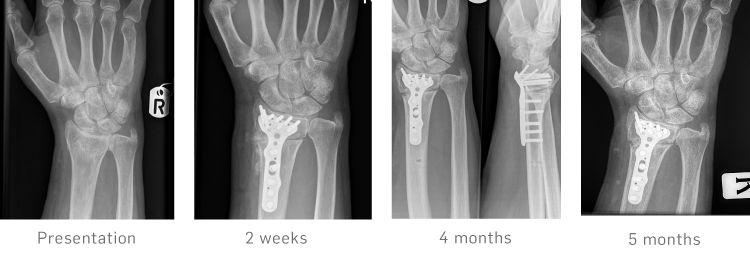
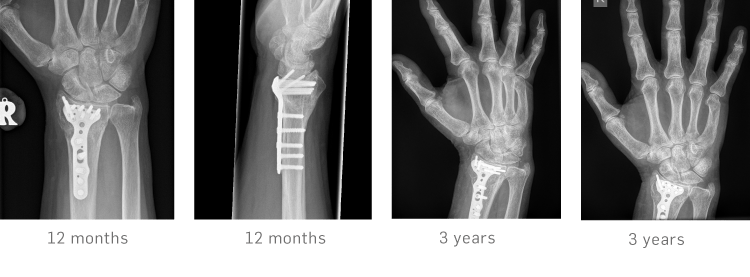
57-year-old female with a history of diabetes. She sustained a distal radius fracture following a fall from a ladder, landing on her right side. 1 month later she experienced a second fall, and radiographs demonstrated slight dorsal displacement of the fracture. The patient was self-employed and declined surgical intervention and was, therefore, managed conservatively. Patient was subsequently discharged, with some wrist stiffness.
In the following months, she developed increasing functional limitations, including significant difficulty with pronation, supination, and volar flexion, accompanied by pain and discomfort. Upon referral to a hand surgeon, clinical assessment revealed approximately 60% of normal pronation/supination. A diagnosis of a malunited, shortened distal radius fracture was made.
The patient underwent a corrective osteotomy via a volar approach. The osteotomy was performed proximal to the distal radioulnar joint (DRUJ), allowing for length restoration and deformity correction. Stabilisation was achieved using a volar locking plate, and the osteotomy gap was filled with genex.
The patient missed a few follow up appointments and at the 5-month follow up she presented with 45° of dorsiflexion and volar flexion. Bony union was confirmed, but there was clinical evidence of extensor pollicis longus (EPL) tendon rupture.
The patient achieved full healing with complete pronation and supination. She reported a mild numbness behind the thumb, which did not impact function and was being managed conservatively. The thumb demonstrated good range of motion with minimal pain.
Note: See genex page for regulatory statements. MA0530R1Listed below are 4 of the most relevant articles for this piece but there is much more to explore on our Library page.
Explore Library