Transform infected foot
Courtesy of Mr Martin Arissol MSc, BSc (Hons), MRCPod, NMP, HCPC Reg. Principal Podiatrist, Cambridgeshire & Peterborough NHS Foundation Trust, England, UK

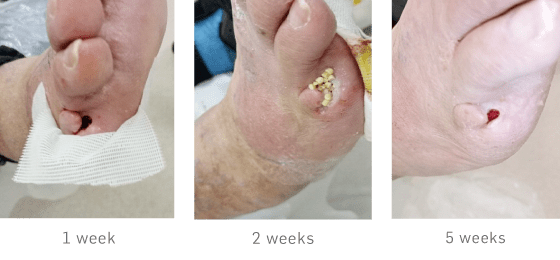
72-year-old male with a past history of chronic heart failure with reduced ejection fraction, insulin-dependent type 2 diabetes mellitus, chronic kidney disease stage 3 (CKD-3), peripheral vascular disease (PVD), atrial fibrillation (AF), hypertension (HTN), asthma, hypogonadism and obesity (high BMI).
The patient presented with bilateral chronic lower limb oedema and dyspnoea secondary to heart failure. He underwent a right 5th toe amputation following progressive tissue loss. Attempts at revascularisation with percutaneous transluminal angioplasty (PTA) were unsuccessful due to severe arterial calcification, particularly of the peroneal artery. Limited arterial run-off to the right foot via the anterior tibial artery was noted, with 50–75% stenosis.
The amputation site demonstrated slow healing, with a persistent wound cavity and exposed wound bed. Wound cultures grew heavy Staphylococcus aureus. Owing to a penicillin allergy, the patient was treated with oral doxycycline.
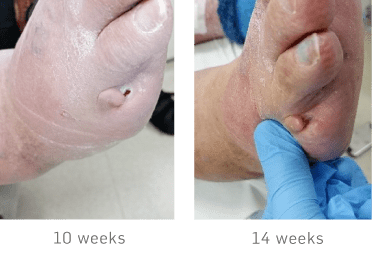
2 months after amputation, wound healing was still poor. The multidisciplinary team (MDT) reviewed the case and determined that further revascularisation posed excessive risk due to the patient’s severe cardiac comorbidities. Instead, a decision was made to pack antibiotic loaded STIMULAN beads into the wound cavity in an outpatient podiatry setting.
After 14 weeks, the wound had completely healed.
Listed below are 4 of the most relevant articles for this piece but there is much more to explore on our Library page.
Explore Library